Kun
Director
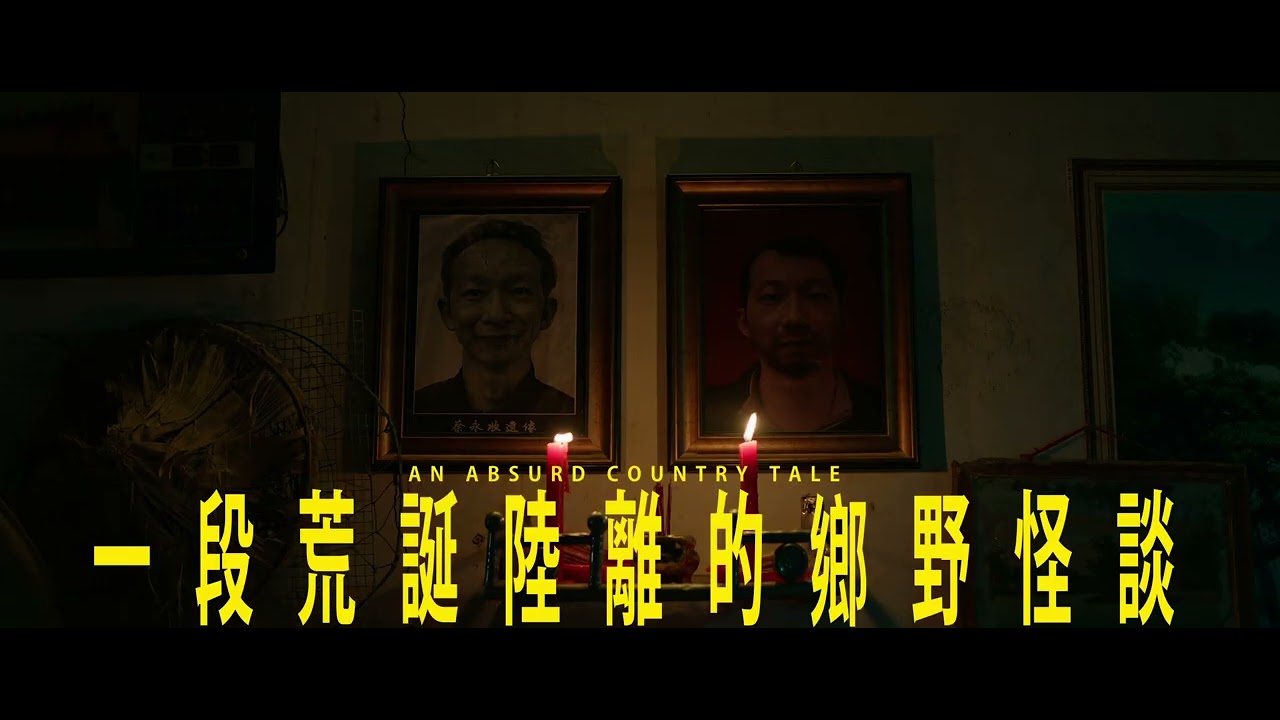
The direct inspiration for Rest in Peace (Ru Tu Wei An) came from the 2017 corpse-swapping cremation case in Lufeng—where an intellectually disabled man was plied with alcohol and sent to a crematorium to be cremated in place of a wealthy deceased person. What lingered with me most about this incident was how, even today, human life can still take a back seat to the deep-seated obsessions in people’s hearts.Born and raised in southern Fujian (Minnan), this obsession with “resting in peace in the earth” (burial in the ground) is not hard for me to understand. Minnan is steeped in intricate folklore, harboring more elaborate and traditional attitudes toward life and death. During the years of the mandatory cremation reform, instances of villagers racing to commit suicide just to claim the final quotas for traditional ground burial were far from unheard of.“Straining with all one’s might simply to die decently.” It sounds so absurd, yet it unfolded with stark reality across rural China.Yet, I had been away from home for a decade. My hometown had faded into little more than the non-standard local accent shared over phone calls with my parents. What about today? Do the people there still cling to these obsessions? Would young people born in urban areas still believe such convictions exist? Initially, neither Lin Xiao (the screenwriter) nor I had a definitive answer.To find out, I decided to use a trip back home to Fujian to broach the topic with my family. I still vividly recall that afternoon, hesitating over how to bring it up with my grandmother (A-ma). Out of nowhere, she spoke up, chiding me for staying away so long and lamenting that she might only have a few years left to see me. She added that the mountain where our ancestral graves lie is shrouded in such dense fog, and the soil is so thick, that it would certainly keep her very, very far from me.I never did ask my grandmother that question that day, but everything became crystal clear in my mind. If cinema can transport audiences to another realm and reveal the profound obsessions of people living in some distant corner of this world, isn’t that the very essence of filmmaking?With this realization, the screenwriter and I set out to conduct field research. At the time, I was shooting my graduate documentary—focusing on the boat-dwelling Tanka (Danmin) community, who had lived on the Jiulong River for generations. They spent their entire lives treating boats as homes, with family shrines aboard, holding the annual Ong Chun (Sending of the Royal Ship) ceremony. We took this opportunity to live alongside them for two months, observing and documenting while exploring the narrative entry point for Rest in Peace.Working on that documentary proved immensely valuable. After nearly ten years away, many memories had grown hazy; the shoot allowed me to rediscover my roots and reconnect with the local people, giving me far more confidence than before. It also offered the screenwriter a foundation for understanding this land. Two months after returning to Beijing, we completed the first draft.When we shared the draft with close friends, a critical issue quickly surfaced—and it would become our biggest creative hurdle: how to convey a niche set of values to a young contemporary audience within such a unique regional cultural context.We experimented extensively to resolve this. Because the underlying tone of Rest in Peace is rooted in a rather grim real-world news event and constrained by strong regional specificities, figuring out how to adapt it into an accessible genre narrative occupied most of our creative efforts.We agreed that Minnan culture, with its rich folk traditions, offered the ideal vehicle for this story. While “resting in peace through burial” is an abstract concept, grounding it in folk customs makes it far more tangible. However, this introduced the challenge of visual translation: folk rituals cannot simply be transplanted or appropriated wholesale; they must serve the narrative. Consequently, every folkloric element in the film underwent careful refinement and adjustment, effectively assembling and blending diverse motifs within the broader framework of Minnan culture.Take the opening scene chanting the inventory of joss paper offerings: visually, it draws on common Minnan funeral rituals—sending paper representations to loved ones in the afterlife through burning. The audio, meanwhile, incorporates the incantations associated with the ritual of “nailing the coffin.“Furthermore, I insisted on using pure Minnan dialect for the dialogue, aiming to keep the characters rooted in a natural, authentic rhythm of everyday speech. Minnan dialect is rich in witty idioms whose unique flavor is lost in standard Mandarin translation. Lines like “When your fated path arrives, cross the bridge on your own” carry not just emotional weight, but an entire worldview. Admittedly, dialect can create a sense of distance for broader audiences, but that was a price we had to pay.Even now, with the film completed, I feel I have yet to strike a balance that leaves me fully satisfied.At times, I wonder whether the absurd yet grounded realism inherent in Minnan culture could develop into a genre vehicle of its own. Just as suspense and crime naturally thrive against the backdrop of Northeast or Northwest China, does Minnan possess a cinematic genre uniquely suited to its spirit? Should the chance arise to explore this kind of filmmaking again, I would be more than eager to continue that journey.