


Mr. Drunk
Zhao ZHANG • 2023
In 2020, before stand-up comedy became a phenomenon in China, Song Wanbo left Henan for Beijing to pursue an unlikely dream. As joy mingles with anxiety and success with uncertainty, he learns that turning pain into laughter may be one way to survive loneliness.
AWARDS & FESTIVALS
Guangzhou International Documentary Festival
China
2020
CAST & CREW
DIRECTOR'S STATEMENT

Zhao ZHANG
Director
Mr. Drunk was filmed during a period when stand-up comedy was rapidly taking off in China (though, due to the way it was first introduced, it has long been more commonly referred to as talk show). A new generation of comedians became household names, and audiences gradually came to understand that stand-up comedy was a way for countless young people to turn the hardships of life into laughter.That year, the second season of Rock & Roast ignited a nationwide stand-up boom. The champion was a comedian from Xinjiang named Cam—a figure who, for various reasons, has become difficult to mention publicly today. In the years that followed, Seasons Three, Four, and Five only grew more popular, until this year, when Season Six ultimately never took place.At the time, there was a well-known saying within the industry: “Xiaoguo in the South, Danliren in the North.” While Xiaoguo dominated the national spotlight, Beijing’s stand-up scene revolved around live performance. Even many comedians who eventually appeared on Rock & Roast were first nurtured and discovered on Danliren’s stages. In the following years, performers and audiences became increasingly mobile, but interestingly, the online and offline paths of Chinese stand-up ultimately arrived at a similar crossroads this year.The first time I met Song Wanbo was before Danliren’s nationwide “Langmache” tour. I tagged along to a kickoff meeting where Icy, one of Danliren’s founders, gathered everyone before they set off. I had only recently begun exploring stand-up comedy and barely recognized anyone in the room.At one point, Icy reminded everyone, “Don’t get drunk.“A curly-haired man sitting below muttered, “So that means we can have a little drink,” sending the people around him into laughter.His expressions and body language were exaggerated, almost awkward, yet they never felt performed. He carried himself with the confidence of someone who naturally occupied the center of attention, while remaining completely relaxed. As someone who felt stiff, nervous, and intimidated at the time, I suddenly had the feeling that if I were to film him, it might actually be… easy.This is an era driven by attention and algorithms. During the period documented in the film, Wanbo was experiencing his own uncertainty. His stand-up career remained respected but never truly broke into the mainstream, even as devoted audiences nicknamed him “the Lu Xun of stand-up” and “the Gabriel García Márquez of stand-up.“His solo shows are never just collections of jokes. Instead, he transforms stand-up into something resembling Rashomon—layer upon layer of storytelling that immerses the audience in shifting perspectives and emotional ambiguity.Many media outlets have interviewed him, yet few have attempted a truly in-depth portrait. Instead, Wanbo has always done the dissecting himself—from the stage.Within the “stories” he tells are family, friendship, love, childhood, hometown, growing up, and the light and darkness he carries inside himself. Beneath the surface of his “comedy” lie sharp observations that, in today’s increasingly constrained online discourse, sometimes feel almost out of place—or even risky to express.Those convictions are certainly part of who he is, but they can never fully contain everything his work has to offer.Wanbo is, above all, someone who wears his heart openly. He speaks candidly to the camera about his thoughts, his joys, and his frustrations. His emotions show plainly on his face; what he dislikes is never hidden.After I sent him the first rough cut of Mr. Drunk, he hesitated over one particular sequence, wondering whether it might damage his public image.Two days later, he sent me this message:“I watched that scene over and over, and I asked a few friends about it. I thought, if I were watching this as someone else, I’d probably think, ‘This guy is kind of a fool.’ But as comedians, we ask audiences to put up with our jokes all the time. So I think I should be able to put up with a little of myself, too. I think we should keep it.“He also said:“It feels like watching an innocent, carefree person slowly get beaten down, eventually moving toward failure.“He worried that people might feel sorry for him after seeing the film. But he was willing to accept whatever interpretation audiences might have.That, perhaps, is exactly why we admire Wanbo.Mr. Drunk is, in many ways, my first true independent character documentary. It carries all the inexperience and rough edges of a first work. I only hope that, in its own small way, it manages to capture one brief chapter in Wanbo’s life.
TRAILER
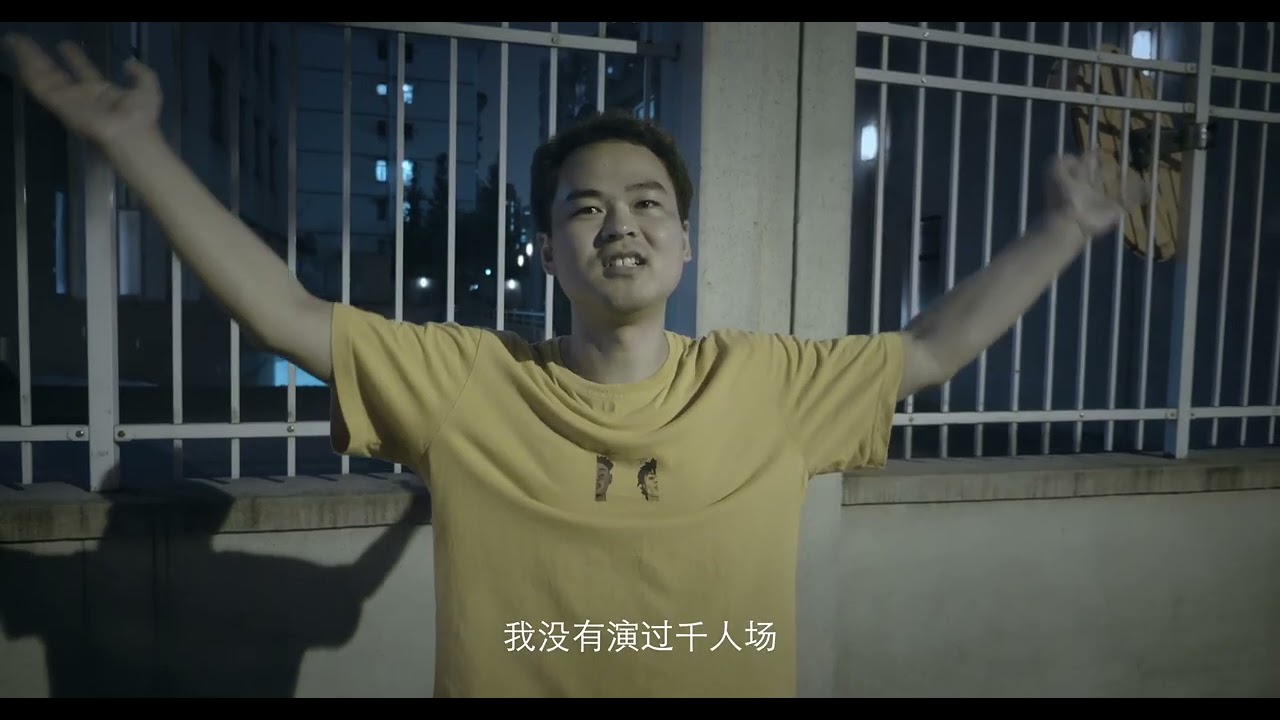
FILM STILLS


USER REVIEWS
Loading reviews...